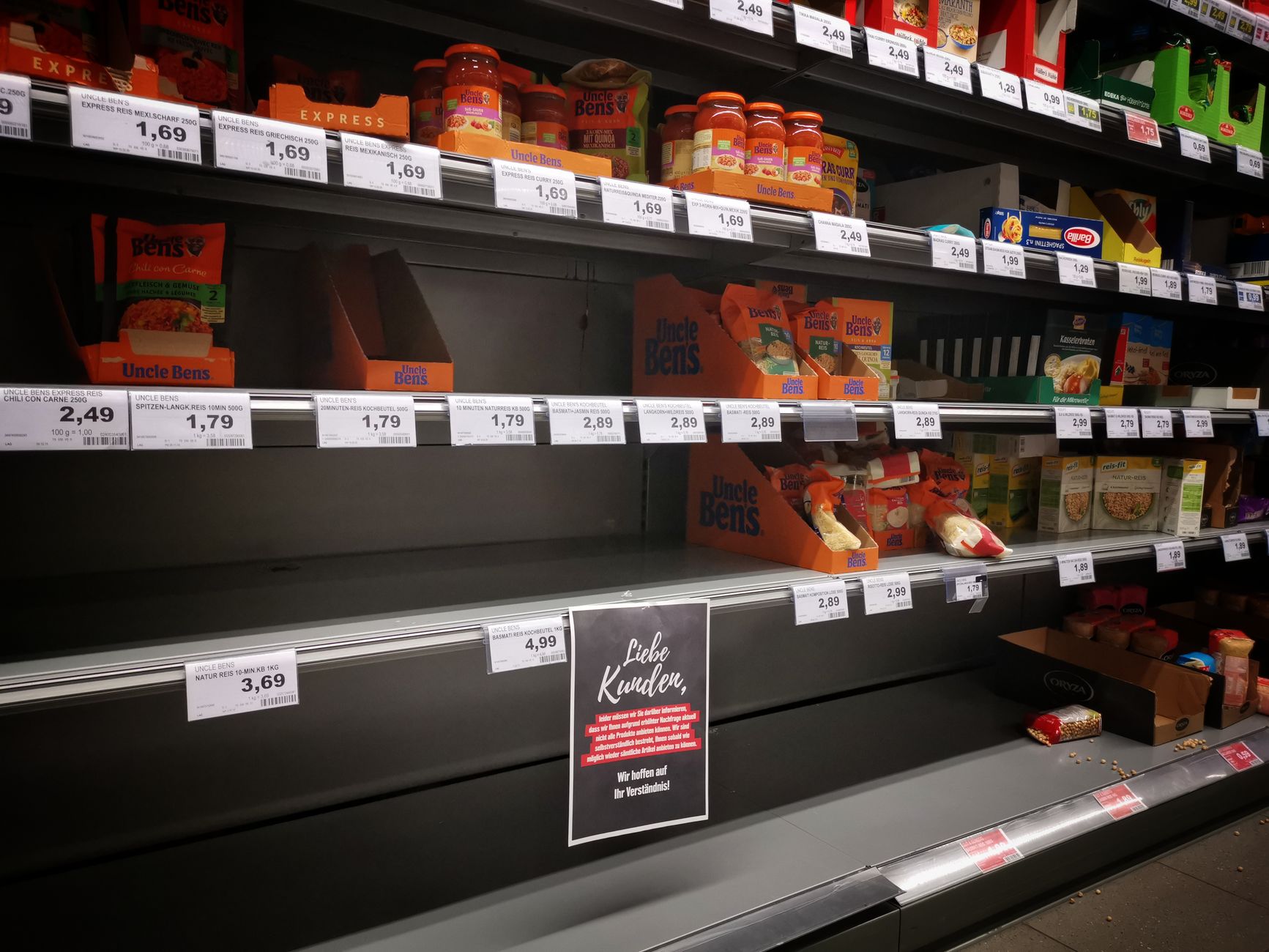
On October 14, the Bureau of Labor Statistics reported that consumer prices rose 3.7% in September — the fastest pace since June 2022 and a sharp step up from August's 3.4%. Markets responded immediately. October FOMC (Federal Open Market Committee, the Fed's rate-setting body) hike odds jumped from below 20% to roughly 41% within hours, and the 10-year Treasury yield, already trading near a 24-year high, pushed toward 5.30%. For a moment, it appeared the Fed's October meeting had just been decided for it.
The headline number masked a more complicated picture. Energy — particularly gasoline, which surged roughly 9% month over month — accounted for a substantial portion of the top-line acceleration. Shelter inflation, reflecting rising rents and equivalent homeowner costs, remained sticky at 4.2% year over year. The more troubling development, however, was in core CPI (consumer price index excluding food and energy, a measure of underlying price pressure), which rose to 3.1% — the first reading above 3.0% since early 2025 and a 0.7-percentage-point jump in a single month. Capital Economics, in commentary following the release, described the core move as "broad-based rather than due to any obvious temporary factors," a phrase that tends to concentrate minds at the Fed.
Three days later, nearly everything changed. Speaking at an International Monetary Fund (IMF, the intergovernmental financial institution that monitors global economic stability) fireside chat on October 17, Fed Chair Kevin Warsh declined to pre-commit to an October rate hike, stating only that he "would not prejudge decisions at upcoming meetings." By the following day's close, October hike odds had retreated to roughly 16%, and Goldman Sachs had publicly read the remarks as a signal that the committee would pause in October before returning to the question of further tightening in December.
The episode laid bare a genuine dilemma at the heart of the Fed's current strategy. On one mandate — price stability — the data argues for action. September's 3.7% headline is the highest since June 2022; 3.1% core is the highest since early 2025; ISM (Institute for Supply Management) Services Prices Paid for September registered 74.0, the highest reading since July 2022. Manufacturing's equivalent figure was 77.9. By any measure, the price data is moving in the wrong direction.
A Labor Market Pulling in the Other Direction
On the other mandate — maximum employment — the picture is murkier. September's jobs report, released October 2, showed a net gain of just 29,000 nonfarm payrolls, a sharp miss against consensus expectations and the second consecutive month of labor market softening. The unemployment rate edged up to 4.2%. Weekly initial jobless claims, at around 199,000, remain near historical lows — an apparent contradiction — but the payroll trend has clearly decelerated. The labor market is not broken, but it is no longer unambiguously strong.
Warsh's stand-down appears to reflect a judgment that the Fed cannot apply further pressure to an economy where employment is already showing cracks, even if inflation is rebounding. A single hot CPI print, particularly one partly driven by energy price volatility, is not the same as a durable re-acceleration of inflation. The committee's October restraint is less a capitulation on inflation than a choice to gather more data before a decision that carries significant downside risk if it proves premature.
| Indicator | September 2026 | August 2026 | Change |
|---|---|---|---|
| CPI Headline (YoY) | 3.7% | 3.4% | +0.3 ppts |
| CPI Core (YoY) | 3.1% | 2.4% | +0.7 ppts |
| Nonfarm Payrolls | +29,000 | +162,000 | −133K |
| Unemployment Rate | 4.2% | 4.0% | +0.2 ppts |
| Core PCE (YoY, Aug) | — | 3.0% | — |
| October FOMC Hike Odds | 16% | — | — |
December's Shadow
The likely October hold should not be mistaken for the end of the tightening cycle. CME FedWatch as of October 17 shows approximately 75-78% odds of a December hike — a figure that will rise or fall sharply depending on the next three weeks of data. The October 28 FOMC decision itself is now almost secondary; the press conference and any updated dot plot (the committee's published projections for the future path of interest rates) carry most of the weight. Specifically, the market is watching whether the 2026 year-end median remains at 4.10% — preserving December optionality — or drops to 3.875%, signaling that September's terminal rate has already been reached.
The week of October 28-30 will go a long way toward answering that question. The Bureau of Economic Analysis releases the Q3 2026 GDP advance estimate on October 29 (consensus tracks around +1.5-2.0% annualized), followed on October 30 by core PCE (personal consumption expenditures, the Fed's preferred inflation measure) for September. Given that September CPI core printed at 3.1%, the PCE equivalent carries elevated risk of a reading above 3.0% for the first time in several months — a development that would almost certainly revive the December hike case that Warsh pointedly declined to rule out in Bangkok.
The Federal Reserve is navigating a regime it has rarely faced: inflation that remains elevated by modern standards, a labor market that is softening but not cracking, and a credit channel that is beginning to show stress after 18 months of higher rates. October's likely hold is a strategic pause, not a retreat. Whether December becomes the final move of this cycle or merely the next one depends on data the Fed has not yet seen. In that sense, the most important sentence Warsh spoke at the IMF was not the one he delivered — it was the one he declined to.
September's 3.7% CPI was the hottest inflation reading since June 2022, but it failed to produce a hike — it produced a pause. Chair Warsh's IMF stand-down signals that the Fed is weighing a softening labor market against re-accelerating prices before acting again. With December hike odds near 75-78%, the tightening cycle is not over; it is delayed. The October 28-30 triple-header of FOMC, GDP, and Core PCE will determine whether that delay is strategic or the beginning of something more consequential.