The number arrived at 8:30 a.m. on a Friday and upended months of Federal Reserve calculus in under an hour. The Bureau of Labor Statistics reported that American employers shed a net 23,000 nonfarm payrolls (the total employment count tracked monthly by the BLS) in July 2026 — the first outright monthly job loss since February 2026 — against a Wall Street consensus that had been penciled in at plus 83,000. The gap between forecast and reality was one of the largest miss margins of the post-pandemic era. Within ninety minutes, futures implied a September rate hike at just 40% probability, down from roughly 55% before the report — a sharp repricing that sent the 2-year Treasury falling 9 basis points intraday.
The context made the number more alarming, not less. The BLS simultaneously revised May and June payrolls down by a combined 103,000 — May revised from +129,000 to +63,000, and June from +57,000 to just +20,000 — meaning the labor market had been softening for months before Friday confirmed it in headline form. The unemployment rate fell from 4.2% to 4.1%, which in any other context might have been reassuring, but the decline came for the wrong reason: the labor force participation rate (the share of adults either employed or actively seeking work) slipped to 61.4%, near a five-and-a-half-year low, as an estimated 264,000 workers abandoned their job searches rather than finding employment. In the language of labor economists, this is the economy's least flattering way to reduce the unemployment rate.
The sector breakdown revealed that the headline loss was driven almost entirely by government payrolls, which shed 53,000 positions — largely concentrated in local government education, reflecting seasonal adjustment distortions. Private-sector losses in leisure and hospitality (-40,000) and retail trade (-19,000) compounded the picture. Healthcare added 22,000 jobs, well below its twelve-month average of 36,000, while construction added 22,000 and manufacturing added 5,000 — the goods-producing sectors that drove the ISM expansion were the only bright spots. Average hourly earnings rose just 3.2% year-over-year, the slowest pace since May 2021 and below the consensus expectation of 3.5%, suggesting the wage-spiral dynamic that worried the Fed for much of 2024-25 has materially unwound.
The Manufacturing Paradox
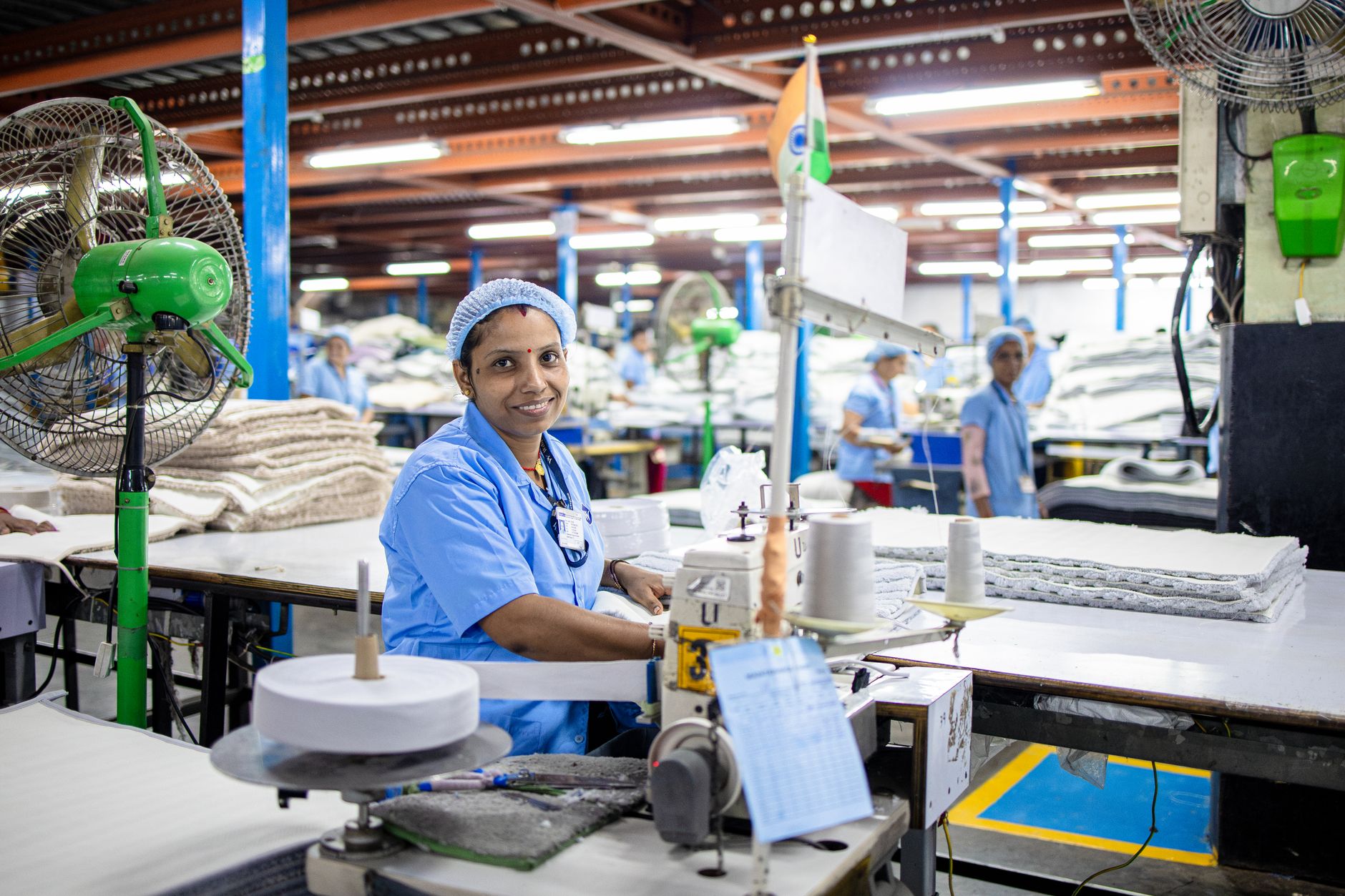
What made the week genuinely unusual was the juxtaposition with manufacturing data released on the same day. The Institute for Supply Management reported its PMI (Purchasing Managers' Index — a composite of factory-floor conditions where readings above 50 indicate expansion) for July at 55.6, its highest level since May 2022. The production sub-index hit 58.5, a nearly five-year high (highest since November 2021). The employment component crossed above 50 for the first time in 33 months. All 15 of 18 industries surveyed reported expansion. Goods-producing America is, by every factory-floor measure, accelerating. The economy that lost 23,000 payroll jobs in July is simultaneously running its factories harder than at any point in four years.
The reconciliation of these two realities requires some arithmetic. Manufacturing employs roughly 12.8 million Americans — about 8% of the nonfarm workforce. Services, which span retail, hospitality, healthcare, and professional services, employ the other 92%. The ISM PMI measures output and sentiment among purchasing managers, which correlates strongly with factory activity but not directly with net job creation. A plant running at full capacity with a stable headcount registers as expansion in the ISM; it does not add to payrolls. July's data suggest that services hiring — the engine of job growth for the past three years — has stalled, while manufacturing output has surged. The ISM's Prices Paid sub-index (a gauge of input cost inflation) fell for a third consecutive month, adding factory-floor confirmation that goods inflation is easing even as activity climbs.
The Fed's Impossible Corner
The Federal Reserve's three hawkish dissenters — Cleveland's Beth Hammack, Minneapolis's Neel Kashkari, and Dallas's Lorie Logan — had constructed a coherent argument at the July 29 FOMC meeting: the labor market remained too strong to wait, and inflation's trajectory too uncertain to assume it would solve itself without additional tightening. That argument was built on June's payrolls of positive 57,000, which appeared to reflect a cooling but still-positive trend. July's -23,000 removes its foundational premise. If the labor market is contracting rather than merely cooling, then tightening policy into a hiring contraction risks the exact outcome the Fed is chartered to avoid: unnecessary economic harm.
And yet the case for September inaction is not clean either. Core PCE (Personal Consumption Expenditures price index excluding food and energy — the Fed's preferred inflation gauge) remains at 3.3% year-over-year, still well above the Fed's 2% mandate. M2 money supply continues to grow at 5.5% annually. Chair Kevin Warsh has declined to characterize his personal September lean in any public forum. The nine-member majority that voted to hold on July 29 was not a dovish coalition; it was a conditional one — and the condition was that incoming data not deteriorate the inflation picture. A jobs loss checks the growth box but does nothing to satisfy the inflation half of the dual mandate.
What the bond market has implicitly priced in is a conditional hold: if Tuesday's CPI confirms the disinflationary trend visible in June's data, September's hike is effectively off the table. The June CPI came in at 3.5% year-over-year; a July print at or below that level, combined with an outright payroll loss, would give the hold majority overwhelming political and analytical cover. A reversal back above 4%, however, would hand the three dissenters their strongest argument yet: that inflation is re-accelerating alongside a weakening labor market — the precise stagflationary condition that argues for pre-emptive tightening before the window closes entirely.
What Comes Next
Tuesday's CPI report for July — released on August 12, just 35 days before the September 15-16 FOMC meeting — has become the single most consequential data point of the 2026 calendar year. It arrives alongside a retail sales report on August 14 that will reveal whether consumers, who were spending robustly through June at plus 6.7% year-over-year, pulled back after the jobs market deteriorated. Taken together, these two releases will almost certainly determine whether the September meeting produces a hold or the first rate hike in months. The FOMC minutes from July 29, released August 19, will add texture — revealing how close the majority came to hiking, and what threshold would tip their vote.
September's FOMC, 38 days away, is the most genuinely uncertain policy meeting of the current cycle. The three dissenters have the data to argue their case; the hold majority has a jobs loss to justify patience. Neither side can claim the economic evidence is clearly on their side. That uncertainty is itself the message: the Federal Reserve enters the autumn of 2026 with more questions than answers, in an economy capable of contracting payrolls and expanding factories in the same month.
July's -23,000 jobs print was the first net payroll loss since February 2026, driven by a collapse in hiring rather than a spike in layoffs — and it immediately repriced September FOMC hike odds from roughly 55% to 40%. The paradox is real: manufacturing is running at a four-year high while services hiring has stalled, and wages grew at their slowest pace since 2021. Tuesday's CPI report (August 12) is now the decisive input — a continued disinflationary trend likely closes the door on a September hike, while a reversal above 4% hands the three hawkish dissenters their strongest case yet.